Pharmacy & Prescriptions
Why Your Prescription Cost More Than Expected
By BillBusted • Published May 6, 2026 • 9 min read
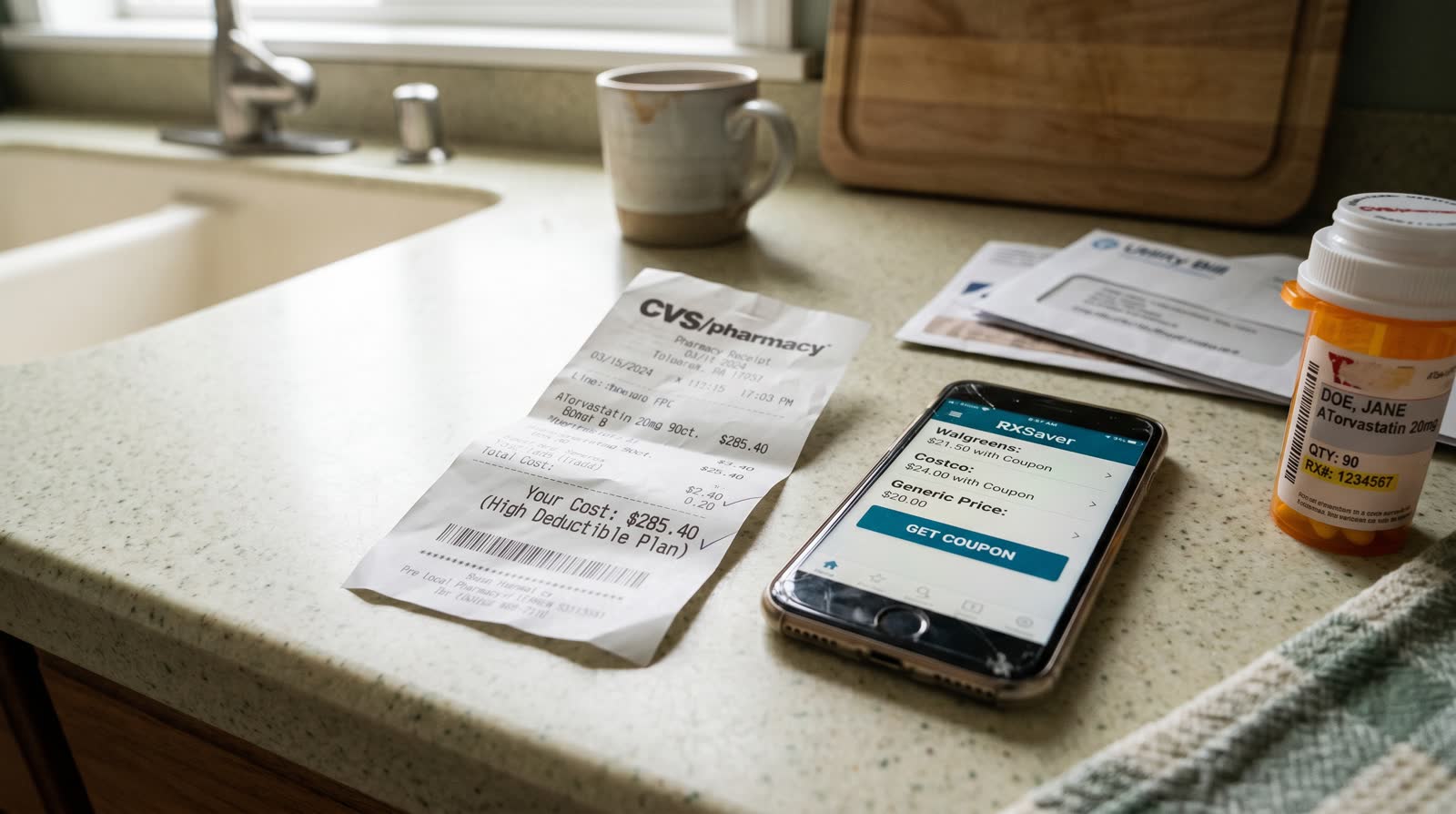
The same prescription routinely costs $11 with one tool, $24 with another, $87 through insurance, and $312 in cash — at the same pharmacy on the same day. The difference is who you ask and what you show at the counter.
Why Prescription Pricing Is Broken
Prescription drug pricing in the U.S. is a function of three opaque players: the manufacturer, the pharmacy benefit manager (PBM), and the pharmacy itself. The "list price" of a drug is rarely what anyone actually pays. Cash discount programs, manufacturer rebates, and direct-to-consumer pharmacies have created a parallel pricing universe that often beats insurance for many drugs.
According to the CFPB, up to 49% of medical bills contain at least one error — and prescription billing is no exception. JAMA Health Forum (2024) found 73.7% of patients who dispute a bill receive a correction or reduction, and pharmacy disputes are some of the easiest to win because the data is digital and the audit trail is clean.
Formulary Tiers Explained
Your insurance plan organizes covered drugs into a formulary — a list of preferred medications, sorted into tiers. Each tier has a different copay or coinsurance. Typical 2026 structure:
- Tier 1 — Preferred generics: $0–$10 copay
- Tier 2 — Non-preferred generics + preferred brand: $20–$50 copay
- Tier 3 — Non-preferred brand: $50–$100 copay or 20–30% coinsurance
- Tier 4 — Specialty: 25–40% coinsurance, often capped at $250–$500 per fill
If your prescription was filled at an unexpectedly high copay, the most common cause is the drug being placed on a higher tier than expected. Call your PBM (number on your prescription card) to verify the tier and ask if there's a clinically equivalent preferred-tier alternative.
Prior Authorization: When Insurance Says Wait
Prior authorization (PA) means your insurer requires advance approval before they'll cover a specific drug. Without PA, the pharmacy may quote you the full cash price. The PA process usually takes 24–72 hours and is the prescribing doctor's responsibility, not yours.
If you arrive at the pharmacy and the price is suddenly thousands of dollars, ask the pharmacist: "Is this requiring prior authorization?" If yes, contact your prescribing doctor to submit the PA request. Most insurers approve PAs within a few business days for medically appropriate prescriptions.
Step Therapy: The "Fail First" Rule
Step therapy requires you to try a cheaper drug first before your insurer covers a more expensive alternative. Sometimes called "fail first" because you must demonstrate that the cheaper drug failed (didn't work or caused side effects) before progressing to the more expensive one.
If your doctor prescribes a drug subject to step therapy and you've already tried the cheaper alternative — or have a medical reason it won't work for you — your doctor can request a step-therapy exception. Most insurers grant exceptions when the doctor provides clinical documentation.
GoodRx: When Cash Beats Insurance
GoodRx is a free prescription discount service. You search the drug + your zip code, get a coupon, and present the coupon at the pharmacy in place of insurance. For many generics, GoodRx beats the insurance copay by 50–80%.
Important caveat: when you pay cash with GoodRx, the spend does not count toward your deductible or out-of-pocket maximum. Use GoodRx when (a) you haven't met your deductible and likely won't this year, or (b) the GoodRx price is dramatically lower than your copay.
Mark Cuban Cost Plus: The Absolute Floor for Generics
Mark Cuban Cost Plus Drug Company prices generics at manufacturer cost + 15% + $5 dispensing fee. The pricing is published, transparent, and no insurance is involved. For many common generic drugs, this is the lowest cash price available — sometimes dramatically below GoodRx and well below insurance copays.
Examples (2026 published prices, illustrative):
- Atorvastatin (generic Lipitor) 40mg, 30 tablets: ~$5
- Metformin 1000mg, 60 tablets: ~$5
- Sildenafil (generic Viagra) 20mg, 30 tablets: ~$13
- Imatinib (generic Gleevec) 400mg, 30 tablets: ~$48 (vs ~$2,500 retail)
Cost Plus ships directly to your home. If your prescription is for a generic and you don't need it the same day, this is the first place to check.
Got a prescription bill that looks off?
Run it through BillBusted's free scan
We compare what you paid against what your insurance benefit summary says you should have paid, and flag the difference.
Scan my bill freeNo account required.
Manufacturer Assistance for Brand-Name Drugs
For most brand-name drugs, the manufacturer offers a copay card or patient assistance program that can reduce your out-of-pocket cost to $0–$25 per fill. Search "[drug name] copay card" or "[drug name] patient assistance program" on the manufacturer's website.
Important: copay cards typically require commercial insurance. Patients on Medicare, Medicaid, or other government plans usually cannot use them due to anti-kickback rules — but separate manufacturer-funded patient assistance programs (PAPs) for low-income patients often exist.
Independent foundations like Patient Access Network (PAN), HealthWell Foundation, and Good Days also provide copay assistance for specific diseases regardless of insurance type. Check NeedyMeds.org as a clearinghouse.
How to Dispute a Wrong Copay
If you paid a higher prescription copay than your plan's formulary suggests, follow this process:
- Call your insurer's pharmacy benefit manager (number on your prescription card). Ask them to verify the formulary tier and the copay for that drug on the date you filled it.
- If the tier or copay was wrong, ask them to reprocess the claim. They will issue a corrected claim to the pharmacy.
- Return to the pharmacy with the corrected claim number. The pharmacy issues you a refund for the overpayment.
- If the pharmacy refuses, file a written complaint with your state insurance department. Find your state's complaint route.
If the pharmacy filled at the wrong price (rather than your insurer applying the wrong tier), the dispute goes to the pharmacy directly. Either way, document everything in writing. BillBusted's $29 Resolution Pack generates the dispute letter.
Frequently Asked Questions
Why is a prescription cost so high even with insurance coverage?
A high prescription cost usually comes down to formulary tier placement, an unmet prior-authorization requirement, a step-therapy rule requiring a cheaper drug first, or using a non-preferred pharmacy. Up to 49% of medical bills contain at least one error (CFPB, 2023), meaning your copay tier may simply be coded incorrectly. Always ask your pharmacist to run both your insurance price and a cash-pay alternative before you pay.
What is GoodRx and can it beat my insurance copay on prescriptions?
GoodRx is a free coupon service that lets you pay a negotiated cash price at the pharmacy instead of using your insurance benefit. For many generic drugs, the GoodRx price is meaningfully lower than the insurance copay. Up to 49% of medical bills contain at least one error (CFPB, 2023), and tier miscodings make the gap even larger. Compare both prices every time before handing over your card.
What is the Mark Cuban Cost Plus Drug Company and how does it work?
Cost Plus Drug Company is a direct-to-consumer pharmacy that prices generic medications at the manufacturer cost plus 15% and a small dispensing fee. The model removes the middlemen that inflate pharmacy pricing. Up to 49% of medical bills contain at least one error (CFPB, 2023), and overpriced generics are a common source of that waste. For many common drugs, Cost Plus is the lowest available cash price.
What is a manufacturer copay card and who qualifies for one?
A manufacturer copay card is a patient assistance program offered by brand-name drug makers that can reduce your out-of-pocket cost to as little as five or ten dollars per fill. Most cards require commercial insurance and are not valid for Medicare or Medicaid. Up to 49% of medical bills contain at least one error (CFPB, 2023), so if a pharmacist did not apply your card, you may have been overcharged and can request a correction.
Can I dispute a prescription copay that seems incorrect?
Yes, a prescription copay dispute is straightforward. Contact your insurer's pharmacy benefit manager using the number on your prescription card, ask them to confirm the formulary tier, and request a claim correction if an error is found. Research shows 73.7% of patients who dispute receive a correction (JAMA Health Forum, 2024). If the correction is approved, the pharmacy is typically required to refund the difference.
What is step therapy and can it be overridden by a doctor?
Step therapy requires you to try a lower-cost drug before your insurer will cover a more expensive alternative. If the first drug fails or causes side effects, your doctor can submit a step-therapy exception request with clinical documentation. Research shows 73.7% of patients who formally dispute an insurance decision receive a correction (JAMA Health Forum, 2024). A well-documented exception letter from your physician is usually sufficient to move to the preferred medication.
Compare your copay against the alternatives before you pay.
Upload your prescription receipt + insurance benefit summary. BillBusted flags overcharges and points to the cheaper option.
No account required.