Dispute & Negotiation
A Medical Bill Negotiation Script That Actually Works
By BillBusted • Published May 6, 2026 • 10 min read
The JAMA Health Forum found that 74% of patients who dispute a medical bill receive a correction or reduction. Most of those cases start with a single phone call. Here is the exact language to use — the opener, the pivot, the ask, and the escalation — organized by situation so you can go into the call prepared.
Before You Call: What to Have Ready
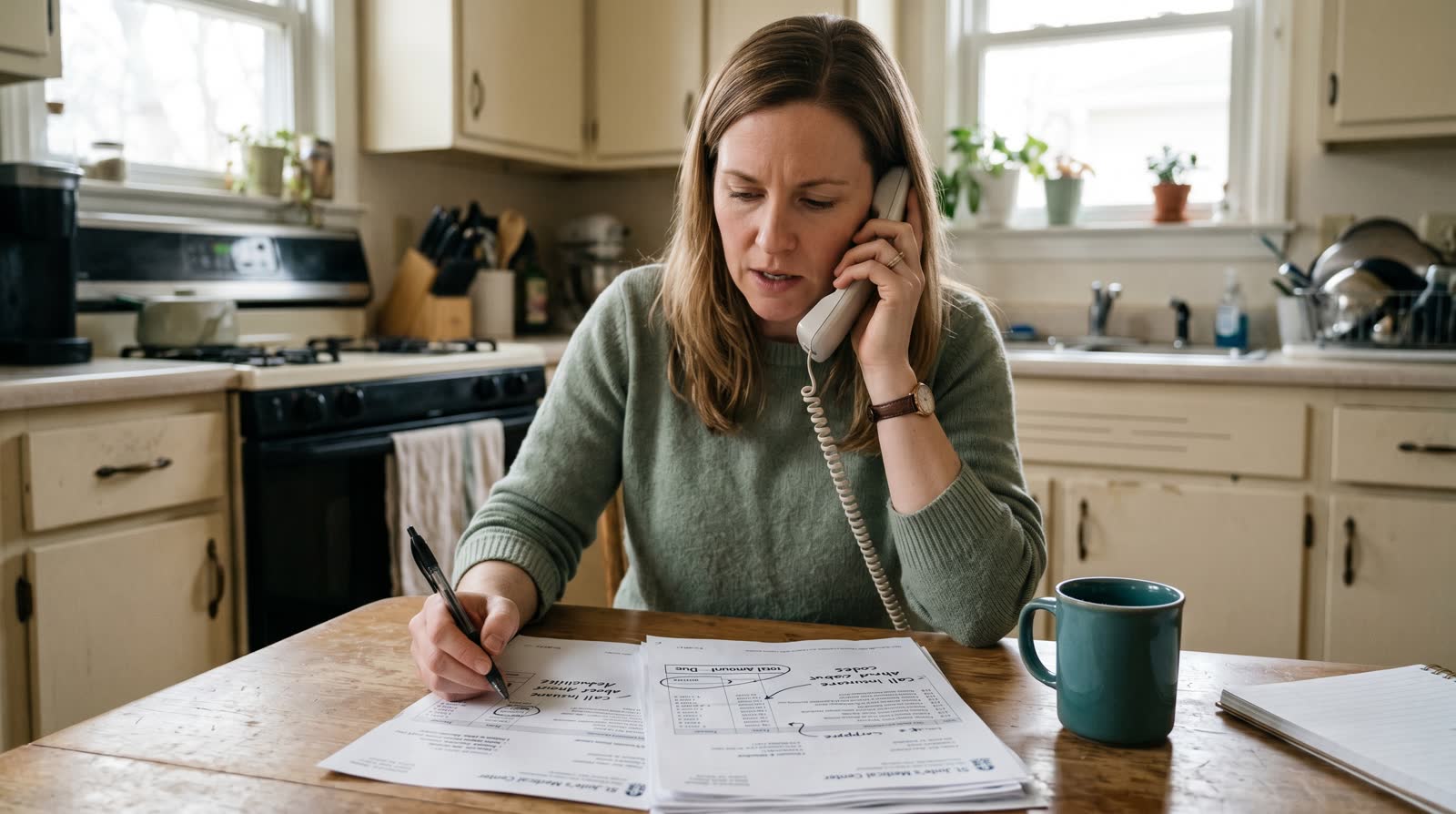
A successful billing call is a prepared call. Walking in cold and asking "can you lower my bill?" almost never works. Walking in with the specific numbers, dates, and codes almost always produces a more useful response — even if it doesn't produce an immediate reduction on the first call.
Before dialing, gather the following:
- The itemized bill — not just the patient statement. You need the CPT codes and line-item amounts. If you don't have one yet, call billing and request it before the negotiation call. Use BillBusted's itemized bill request tool to generate the right language.
- Your EOB — if you have insurance, your Explanation of Benefits shows the allowed amount and the patient responsibility. That number is what you legally owe — not the amount on the provider statement. See our EOB reading guide for what to look for.
- Account number — on the billing statement. Have it ready to give at the start of the call.
- A notepad — write down the name of every representative you speak with, the date and time, and what was said or offered. This record matters if you need to escalate.
- A quiet place to call — billing calls can take 30 minutes or more. Don't do this from a car or a crowded space.
According to AARP, the average overcharge on hospital bills over $10,000 is approximately $1,300. That figure suggests most large bills have at least one number worth questioning — which means coming in with specifics is worth the preparation time.
The Opener: How to Start the Call
The way you open the call sets the tone. Billing representatives handle defensive or angry callers all day. A calm, specific, collaborative opener gets you further than frustration does.
Use this:
"Hi, I'm calling about account number [X]. I've received a bill for [total amount] and I'm trying to understand a few of the line items before I make any payment. I want to make sure I'm paying the right amount. Who am I speaking with today?"
This opener does four things: it gives your account number immediately (saves time), signals that you're organized and have looked at the bill, positions you as someone trying to resolve rather than fight, and gets the representative's name on record.
Write down their name as soon as they give it. Then proceed based on your specific situation using the scripts below.
Script for Insured Patients: EOB Mismatch
Use this when the provider's bill shows a higher amount than the patient responsibility on your EOB.
"I have my Explanation of Benefits in front of me for this date of service. The EOB shows my patient responsibility as [EOB amount]. The statement I received from your office shows [provider amount]. I'd like to understand the difference before I pay. Can you tell me which figure is correct, and if there's a discrepancy with the insurer, can your billing team reconcile that?"
If they say the provider bill is correct and the EOB is wrong
"I understand. For my records, I do need this resolved before I pay. Can you resubmit the claim to my insurer and let me know once it's been processed? I'll hold off on payment until the insurer confirms the correct amount."
If they ask you to call your insurer
Do so — but also ask the billing rep to note in your account that you are actively investigating the discrepancy. This creates a paper trail and may pause collection activity.
Script for Self-Pay Patients: Prompt-Pay and Hardship
Self-pay patients have two main levers: the prompt-pay discount and the hardship or financial assistance program. Use them in order.
Prompt-pay ask
"I don't have insurance and I'm paying out of pocket. I've reviewed this bill and I'm ready to pay today if we can agree on an amount. If I were to pay a lump sum right now, what is the best rate you can offer — or what is the prompt-pay discount this facility applies?"
Most hospitals apply a discount for self-pay patients that brings the bill closer to the Medicare rate. Nationally, Medicare reimbursement rates run 40–60% below chargemaster rates — so there is often significant room to negotiate. Don't accept the first number offered. Counter with:
"I appreciate that. Is there any additional flexibility? I'm trying to avoid a payment plan and settle this today, so I'd like to make sure we're at the best possible number."
Financial hardship pivot
If the prompt-pay discount doesn't bring the bill to a manageable level:
"I'd also like to ask about your financial assistance program. I understand this hospital is a nonprofit and is required to offer a financial assistance policy. Can you send me the application and the income thresholds for the program? I'd like to apply before making any payment."
Applying for charity care is your right at a nonprofit hospital under 501(r) — see our full guide to the charity care application process. The billing rep is required to give you the application or tell you how to obtain it.
Script When You Suspect a Code Error or Upcoding
Use this when a specific line item on the itemized bill looks wrong — either a code that seems too high for the visit, or a service that seems duplicated.
"I have the itemized bill in front of me and I want to ask about line item [X]. The code billed is [CPT code] and the charge is [amount]. I want to make sure that code accurately reflects the visit I had on [date]. The visit was [brief plain-English description — for example, 'a routine 15-minute follow-up for an existing prescription']. Can you confirm that code is right for that type of visit, or escalate it to your coding team?"
If they say they can't review codes on the phone
"I understand. Can you give me the direct fax number or mailing address to submit a written dispute for a specific CPT code? And can you note in the account that I'm disputing this code so collection is paused while the review happens?"
If you suspect the code is wrong but aren't certain, BillBusted's free scan can help you compare the billed code to the documented visit level before you make any assertions on the call. Having that analysis in hand makes the conversation much more specific and productive. You can also review exact code descriptions at BillBusted's CPT code directory before calling.
For more background on what upcoding looks like and how to identify it, see our guide on what upcoding actually means.
Resolution Pack
Want call scripts generated specifically for your bill?
BillBusted's Resolution Pack ($29) generates provider call scripts, insurer call scripts, a formal dispute letter, and a follow-up timeline — all based on your actual bill. It's the difference between a generic script and one that uses your exact codes, dates, and amounts.
Get my Resolution Pack Start with a free scanDelivered in-app and by email.
When the Rep Can't Help: Escalation Script
Many billing representatives have limited authority. If the rep is helpful but can't actually adjust the bill, you need to escalate — calmly and specifically.
Ask for a supervisor
"I appreciate your help today. It sounds like this issue needs someone with more authority to resolve. Can I speak with a billing supervisor or your patient financial services department?"
Ask for the patient advocate
Many hospitals have a patient advocate or patient financial counselor separate from the standard billing department. These individuals often have broader discretion for hardship adjustments.
"Does your facility have a patient financial advocate or a patient financial counselor I can speak with? I'd like to explore all available options before making any payment decisions."
Put it in writing after the call
After any call where you raised a concern — even if it was unresolved — send a brief follow-up letter or email summarizing what you discussed. Address it to the billing department and include: your account number, the date of the call, the representative's name, the specific concern you raised, and what you were told.
A written record serves two purposes: it creates a formal dispute paper trail, and it sometimes prompts a resolution that the phone call didn't. Billing managers review written disputes differently than call logs.
Know when to file a formal complaint
If phone calls and written disputes to the provider don't produce a result, your next step depends on your plan type:
- Fully insured / ACA / individual plan: File a complaint with your state Department of Insurance.
- Employer self-funded / ERISA plan: File a complaint with the U.S. Department of Labor's Employee Benefits Security Administration (EBSA).
- Medicare: Contact your Medicare Administrative Contractor or file with 1-800-MEDICARE.
- Medicaid: Contact your state Medicaid agency.
- Self-pay, no GFE dispute: Contact the hospital's compliance office or your state attorney general.
BillBusted's Full Audit maps out the exact complaint route for your specific plan type and generates the complaint letters and escalation language for each route.
After the Call: What to Do With What You Learned
If they agreed to a reduction
Do not pay immediately. Ask for the agreed amount in writing — a letter, an email, or a revised billing statement showing the new balance. The wording should confirm that paying the agreed amount will satisfy the account in full. Only then should you pay. Keep that letter permanently.
If they agreed to a payment plan
Confirm the plan in writing too. Ask for: the number of payments, the amount per payment, whether interest applies (it usually should not for hospital bills), and whether the plan prevents collection activity. Nonprofit hospitals under 501(r) are required to offer interest-free payment plans to eligible patients — ask explicitly whether yours qualifies.
If nothing was resolved
That is not a failure — it is data. You now have a call record with a date, a representative's name, and the exact position the provider has taken. Send the follow-up letter. Then decide whether to escalate to your insurer, file a complaint, or use a service like BillBusted's Done-For-You ($149) option to hand the follow-up off entirely.
A note on timing
The CFPB has noted that up to 49% of medical bills contain at least one error — but those errors are much easier to fix before a bill ages into collections. Call within 30 to 60 days of receiving the bill whenever possible. The further a bill gets from the original service date, the harder it becomes to get a coding team to review it or for a billing supervisor to have flexibility.
Frequently Asked Questions
Can I negotiate a medical bill over the phone?
Negotiating a medical bill over the phone is something billing departments handle routinely. Representatives often have authority to apply self-pay discounts, prompt-pay reductions, and hardship adjustments in a single call. Research shows up to 49% of medical bills contain at least one error (CFPB, 2023), so having your itemized statement ready gives you concrete points to raise and strengthens your position before you dial.
Should I get an itemized bill before I negotiate?
Negotiating after you have the itemized bill is the better approach. The itemized statement lists every CPT code and line item, giving you specific charges to question rather than an opaque total. Up to 49% of medical bills contain at least one error (CFPB, 2023), so reviewing the detail first means you can point to exactly what looks wrong and ask for a documented correction before discussing any reduction.
What is a prompt-pay discount and how do I request one?
A prompt-pay discount is a price reduction a provider offers in exchange for quick or lump-sum payment. Many hospital billing departments will accept 10 to 30 percent less if you pay in full on the spot. Because up to 49% of medical bills contain at least one error (CFPB, 2023), review the itemized bill first, then ask what the lowest amount is that will mark the account paid in full, and get that figure in writing before you pay.
What should I do if the billing rep says they cannot reduce my bill?
If the billing representative says they cannot lower the bill, ask to be transferred to a billing supervisor or patient financial advocate. Escalating is a normal part of the process, not a confrontation. Because up to 49% of medical bills contain at least one error (CFPB, 2023), putting your concerns in writing after the call, with the date, the representative's name, and the specific charges you questioned, creates a paper trail that supports any formal appeal.
Do I need to mention that I used a billing audit tool when I call?
You do not need to mention a billing audit tool during the call. The negotiation works because you know the specific CPT codes, the explanation of benefits amounts, and the questions those details raise, not because of what software you used. Up to 49% of medical bills contain at least one error (CFPB, 2023), so focusing on those concrete line items keeps the conversation productive and professional without prompting unnecessary defensiveness from the representative.
How do I confirm an agreed medical bill reduction in writing?
Before you end the call, ask the representative to send you a letter stating the agreed amount and confirming that payment of that amount will satisfy the account in full. Do not pay until that written confirmation arrives. Up to 49% of medical bills contain at least one error (CFPB, 2023), and a signed agreement protects you if the account is later sent to collections at the original balance. Keep the letter indefinitely once you have paid.
Want call scripts written specifically for your bill?
BillBusted's Resolution Pack generates provider call scripts, insurer call scripts, a formal dispute letter, and a follow-up timeline — all using the actual codes, amounts, and dates from your specific bill. No generic templates.
Free scan takes 60 seconds. No account required.